How Do I Sync Uploaded Documents With Synccom
The Sync desktop awarding
The Sync desktop application is bachelor for Windows and Mac operating systems. When you install Sync on your computer the app will create a special Sync folder. The Sync binder works just like whatever other folder, and provides the following features:
- Files in the Sync folder are backed upwards to the cloud automatically.
- Files in the Sync folder are protected with version history and deleted file recovery.
- Y'all can share files and folders in the Sync folder.
- Y'all tin can access files that other people accept shared to you, from the Sync folder.
- Yous can admission the Sync binder from your reckoner, phone, tablet and the web.
Y'all can employ the desktop app to speedily access the Sync folder on your computer, search for your files in Sync and the Vault, stay up-to-date with recent file activity, and alter your countersign.
In this commodity:
- How do I download and install the Sync desktop app?
- Accessing the Sync app and Sync folder on your computer
- Calculation files and folders to Sync, from your reckoner
- Search for files and view recent files from the Sync desktop app
- Desktop overlay icons
- Syncing condition
- Desktop app settings and preferences
- Suspension and resume the desktop app
- Selective sync
- Updating the Sync desktop app to the latest version
- How do I confirm that the files in my Sync folder are in the cloud?
- Uninstalling Sync
How do I download and install the Sync desktop app?
The Sync 64 flake desktop app is available for Windows seven, 8, 10, 11 and macOS 10.ix+. You'll need admin privileges on your computer to install and run Sync. For Windows XP or older versions of macOS you'll want to download the legacy installer.
To install the Sync desktop app:
If you don't yet have a Sync account, create a free account from the Sync homepage before proceeding.
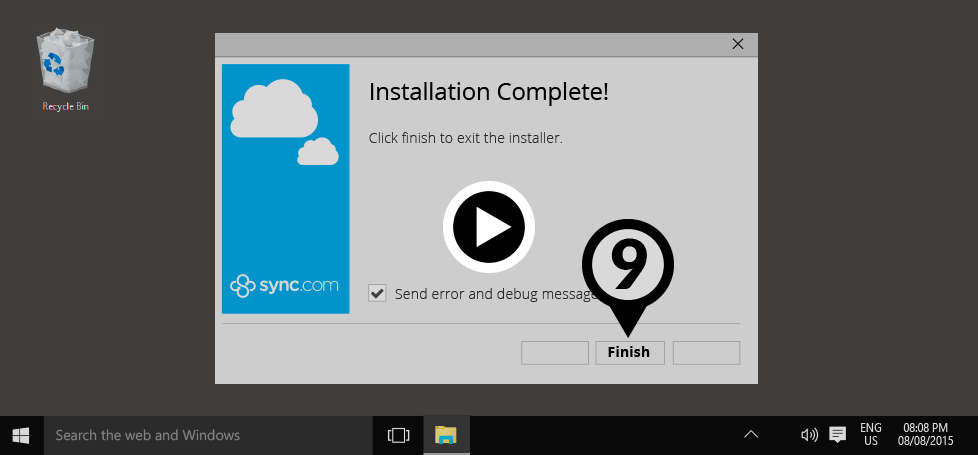
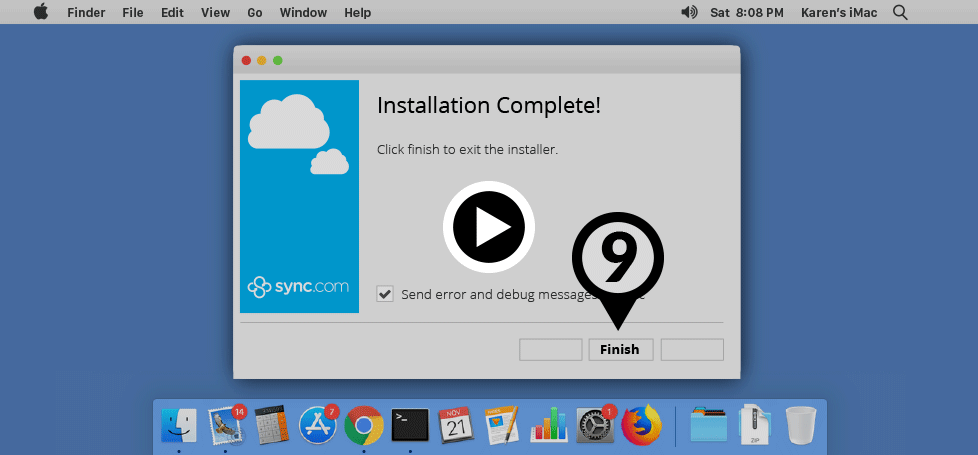
Show on Windows Show on Mac
- Download the desktop app installer to your computer.
- On Windows run the sync-installer.exe program.
On Mac open the Sync.dmg deejay epitome and double click the Sync.app installer. - You will be prompted to permit Sync to install software on your figurer. Click Yeah, Open up or Run to continue.
- Subsequently a few seconds you will be greeted with the Sync installer welcome screen. If you've already created a Sync account, or you lot're installing Sync on multiple computers, select the Utilise an existing account option and click Next.
- Enter your electronic mail address (Sync username) and countersign and click Side by side.
- Select where you want the Sync folder to exist created on your computer. If yous're non sure don't worry, as you tin can change the location later on if needed.
- Enter a Device name that allows you to hands identify your computer, for case "Office Computer" or "Lisa's Laptop". This is helpful if you program on using Sync with multiple computers.
- Click Next.
- Click Stop to exit the installer. Congratulations, you now accept Sync installed!
Once Sync is installed on your computer, you lot tin can access the Sync app from the Windows system tray or Mac carte bar.
Installing Sync on multiple computers:
Y'all can install Sync on up to five of your own computers or devices and the contents of the Sync folder will automatically synchronize to each figurer. Merely follow the aforementioned steps outlined to a higher place to install on additional computers.
If you're installing Sync on computers used by other people (for example team members, employees or family members), you should create a separate Sync account for each person. This will ensure y'all have command over which folders remain individual in your account, and which folders are shared.
Accessing the Sync app and Sync binder on your reckoner
Once Sync is installed on your estimator, you can admission the Sync app past clicking the Sync icon on Windows system tray or Mac menu bar.
Windows organisation tray:
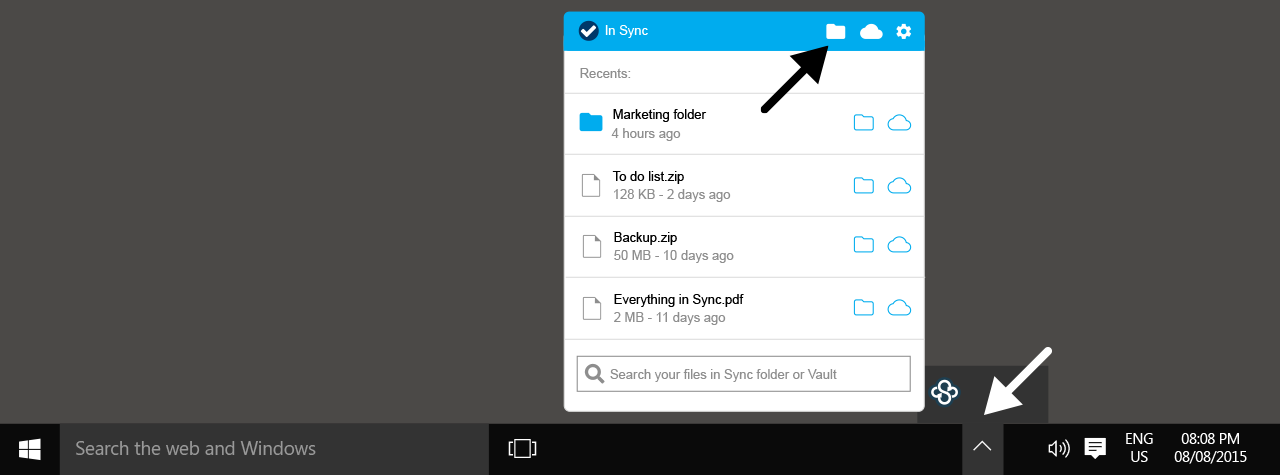
The Windows organisation tray is located at the bottom right corner of your screen. If you lot don't encounter the Sync icon in the arrangement tray after installation you lot may demand to click the white upwards arrow in the system tray offset.
Mac menu bar:
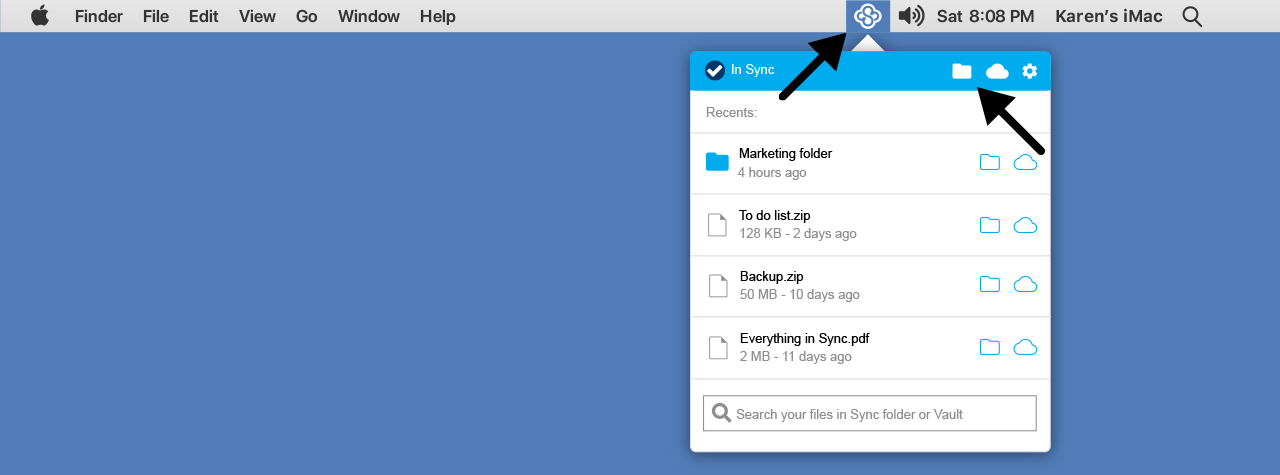
The Mac menu bar is located at the top correct corner of your screen.
Finding the Sync binder on your computer:
- Click the Sync icon on the Windows arrangement tray or the Mac bill of fare bar.
- Click the Sync binder icon.
This opens the Sync folder in a new window on your computer. The Sync folder works merely like whatever other folder on your computer.
Adding files and folders to Sync, from your computer
Once yous have installed the Sync desktop app you lot can drag and drop files or folders direct into the Sync folder on your computer. Additionally, you tin employ the Save As… file menu selection in near applications, to salve files to your Sync binder.
Files in your Sync folder are automatically backed upwards to the cloud.
Adding files and folders to Sync, from your reckoner:
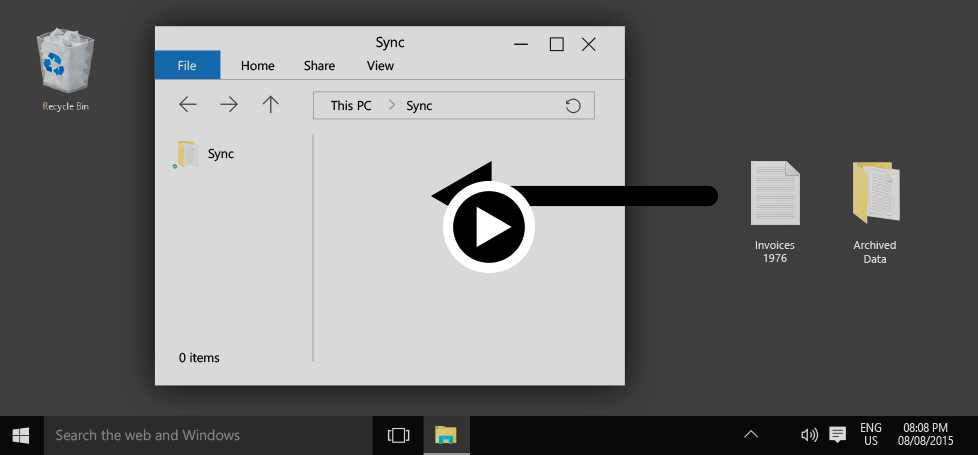
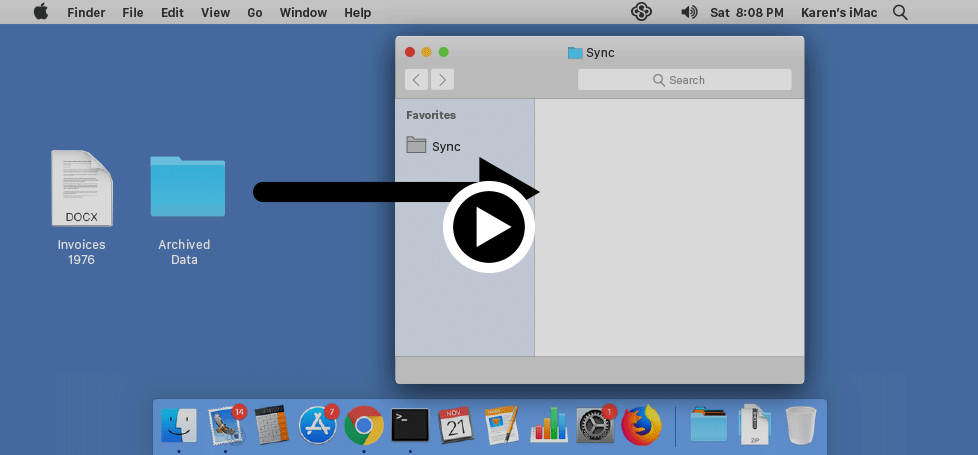
Show on Windows Evidence on Mac
- Click the Sync icon on the Windows organization tray or the Mac carte bar.
- Click the Sync folder icon, to open the Sync folder.
- Now move, drag or copy files and folders from other locations on your estimator, into the Sync folder.
- Files in the Sync binder are backed up to the cloud automatically.
Working direct out of the Sync folder ensures that yous are always backed upward.
Adding files to Sync, using the Salve As… file card choice from any application:
Because the Sync folder works only like any other folder on your computer, you can salve your files directly to Sync from virtually whatever desktop application yous use. For example, to salvage to Sync from Microsoft Word you would:
- Open up your document in Microsoft Discussion.
- From the File Menu in Word select Save As…
- Browse to the Sync folder on your computer and click Save.
Adding files and folders to Sync, using the Sync.com spider web console:
Y'all tin can also utilize your spider web browser to upload files and folders from your estimator to Sync. See the Uploading files and folders to Sync, using the web panel article for instructions.
Search for files and view recent files from the Sync desktop app
Yous tin can utilise the Sync desktop app or mobile app to search for any file located in your Sync folder or Vault, and to quickly access recently added or changed files.
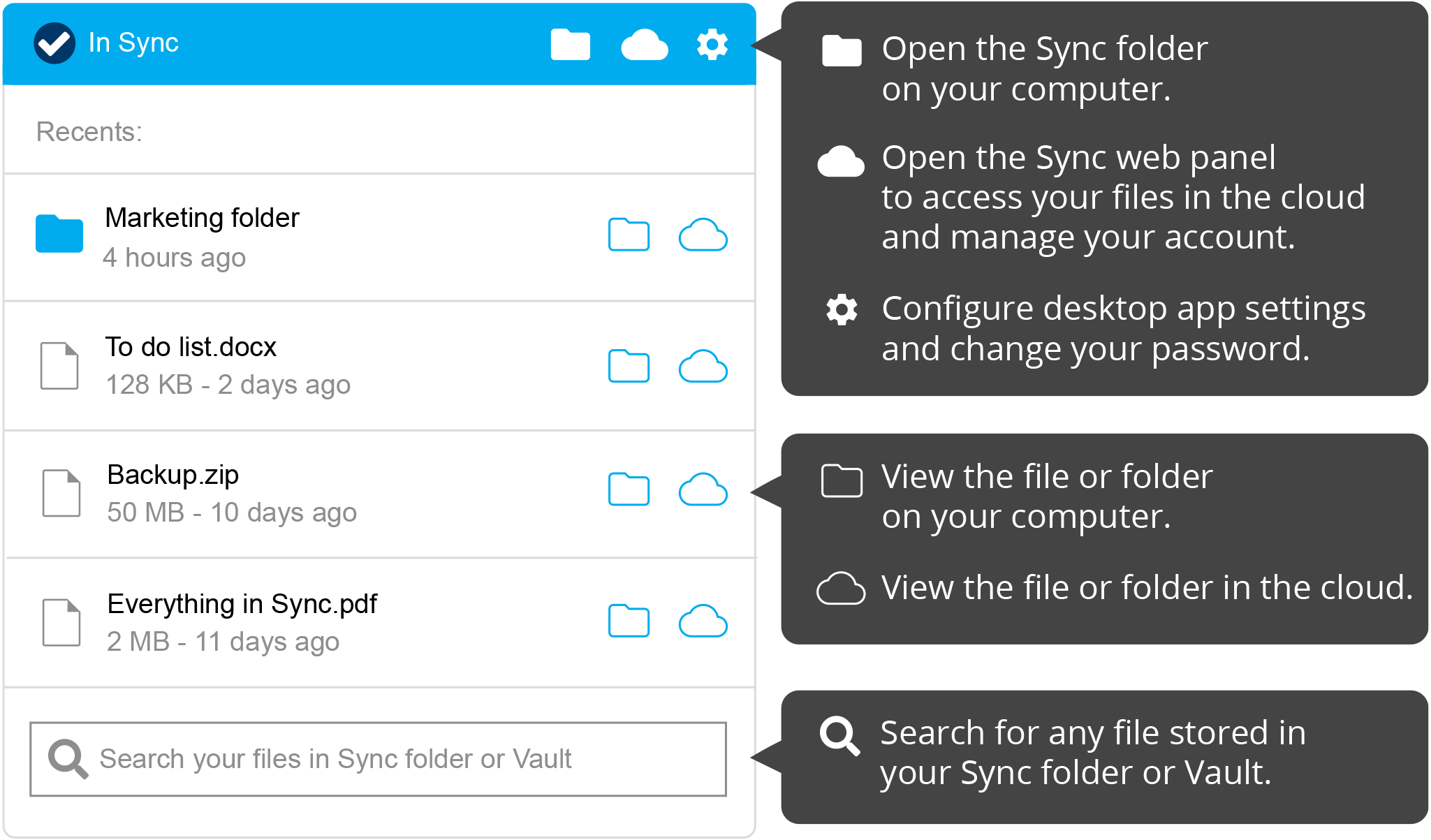
Desktop app steps:
- Click the Sync icon on the Windows organisation tray or the Mac menu bar.
- Past default recently added or edited files will exist listed.
- To search: Type in a search term in the search box, and press Enter or Render.
- Click the folder icon beside the search result to view the file or folder on your computer. Click the cloud icon beside the search result to view the file or binder on the Sync web console (the cloud).
Note: you can besides search using the mobile apps.
Desktop overlay icons
The Sync desktop application automatically keeps your files and binder synchronized. The app will display overlay icons on your files and folders, to let you run into the condition of syncing.
- Overlay icons on an individual file or folder show the status of just that file or folder.
- The status icon in the Windows organization tray or Mac carte bar shows overall status.
Overlay icons:
Overlay icons are displayed on all file and folders in your Sync folder.
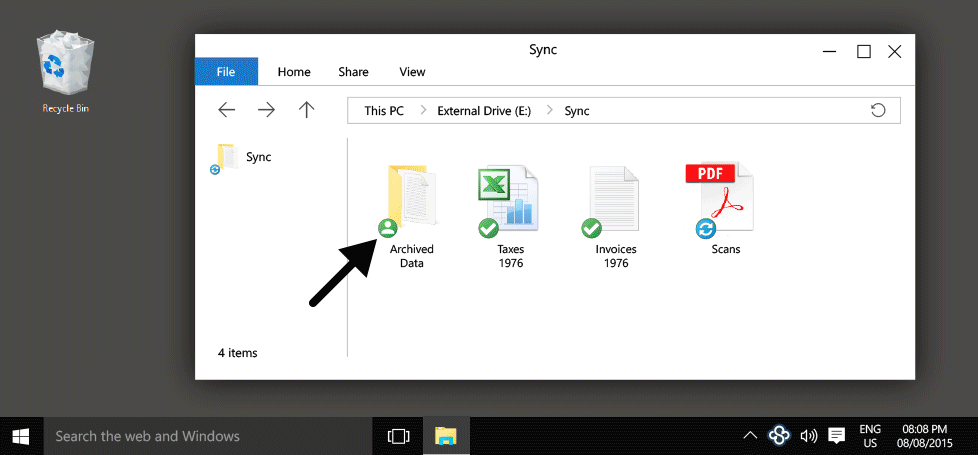

Testify on Windows Show on Mac
 In sync – a light-green circumvolve with a check marker means the file or binder has finished syncing (backed upwardly to the cloud) and is up-to-date.
 Shared – a green circle with a share icon means the file or folder has been shared as a team shared folder or a link, and is up-to-appointment.
 Sync in progress – a blue circumvolve with rotating arrows means the file or folder is in the procedure of syncing.
 A file or folder isn't syncing – a grey circle with a minus sign means the file or folder is non syncing. This tin can occur if you have configured selective sync, or if the file proper noun contains invalid characters. The Progress tab may provide more item.
 Mistake – a red circle with an ten means that Sync is unable to sync the file or folder. This can occur when your storage quota is full (tin can't upload), or your hard bulldoze is total (tin't download), or there is a technical issue preventing syncing. Contact support if you run across this.
Syncing condition
The app will brandish a status icon in the Windows system tray or Mac menu bar that shows overall syncing status.
Status icons:
The Sync status icon is located in the Windows system tray or the Mac carte du jour bar.
 In sync – a check marking ways all files in your Sync folder have finished syncing (backed up to the cloud) and are up-to-appointment.
 Indexing – a syncing icon means that the Sync app is indexing or transferring your files. Indexing ways that the app is verifying that your files are in sync. When files are transferring you can view transfer status and speeds by clicking the status icon.
 Paused – a circle with minus sign means that the Sync app is paused (non running). Click the icon and select Resume. If the Sync app keeps pausing contact support.
 Fault – an alert symbol ways that Sync is unable to synchronize your files and folders. This can occur if y'all temporarily lose your network connection, or if you go over quota. If the Sync app is stuck in this country contact support.
Desktop app preferences and settings
Desktop app settings are specific to the computer you take installed Sync on. Account-wide settings are managed exclusively from the Sync.com web console. Once Sync is installed on your computer, you can access the Sync desktop app preferences as follows:
- Click the Sync icon on the Windows organisation tray or the Mac menu bar.
- Click the Settings icon ().
- Select Preferences from the menu.
Options tab:
Run When Computer is Started – Sync automatically starts when you sign into your computer. With this option disabled you would have to manually outset Sync. Enabled by default.
Show Desktop Notifications – If you have Sync installed on multiple computers, or when multiple people are collaborating, the Sync app will display pop-up notifications, letting you know if a file has been added, changed or deleted. Desktop notifications may besides include of import business relationship, file and organization notifications. Enabled past default.
Show Icon Overlays – The Sync app displays status icons over every file and folder in the Sync binder when enabled. Enabled past default.
Written report Errors to Server – When the Sync app encounters an mistake, a notification is sent to our QA squad for further review. This helps our squad identify and solve issues.
Business relationship tab:
Change password – Change a forgotten countersign directly from the desktop app. This feature can be disabled.
Export a listing of all files – Click Generate to download a .CSV document list all files in your Sync folder and Vault. This is useful for auditing everything you accept in Sync.
Uninstall – See the how to uninstall Sync articles for more details.
Network tab:
Bandwidth settings – You lot can limit app transfer speed, which is useful if yous have express bandwidth available. Automatic is the fastest setting.
Deejay Cache – To improve performance, the Sync app temporarily stores file data in a hidden cache binder, located inside the Sync folder. The temporary enshroud takes upwards additional space on your computer and is automatically cleared from time to time. You lot can manually articulate the cache or adjust the automatic cleanup schedule.
Configure a Network Proxy – This is an advanced network configuration that can enable Sync to work backside a SOCKS5 VPN service. The default proxy type is Automatic (no proxy).
SSL Certificates – Allow Sync to be used behind corporate firewalls that utilize trusted tertiary-party SSL certificates. Disabled by default.
Progress tab:
The progress tab provides file transfer details, and lists whatsoever files or folders that are not syncing. If your files are not syncing, this is a good place to first troubleshooting.
Advanced tab:
The Advanced tab allows yous to command which folders get synced to each calculator, a feature called selective sync. Selective sync is typically used if Sync is installed on multiple computers, and you lot desire to control which folders (in your Sync folder) get synchronized to each estimator.
Interruption and resume the desktop app
The Sync desktop app runs automatically whenever yous are signed into your computer. You lot can manually suspension or resume Sync as follows:
- Click the Sync icon on the Windows organization tray or the Mac carte du jour bar.
- Click the Settings icon ().
- Select Pause Sync or Resume Sync from the menu.
Updating the Sync desktop app to the latest version
You can manually update Sync equally follows:
-
- Download the latest desktop app installer to your reckoner. The installer will upgrade an existing installation automatically.
- On Windows run the sync-installer.exe program.
On Mac open the Sync.dmg and run the Sync.app installer. - You will exist prompted to permit Sync to install software on your computer. Click Yes, Open or Run to continue.
- Sync will detect an existing installation and uninstall it offset. Click Yes. Don't worry, your existing Sync folder, files and business relationship setting will not change.
- It will accept a few seconds for the installer to configure itself, at which point you will exist greeted with the Sync installer setup screen.
- The installer will detect your existing account. Ensure Reuse existing business relationship is checked, and click Next.
- Click Stop to exit the installer.
Sync is now upgraded to the latest version.
What version of Sync am I currently running?
- Click the Sync icon on the Windows system tray or the Mac menu bar.
- Click the Settings icon (cog).
- Select Preferences.
- Click the Account tab.
- The version is displayed at the bottom of the Account tab.
Selective sync
If you accept the Sync desktop app installed on multiple computers, y'all tin can command which
folders within your Sync binder get synced to each computer. This is accomplished via selective sync as follows:
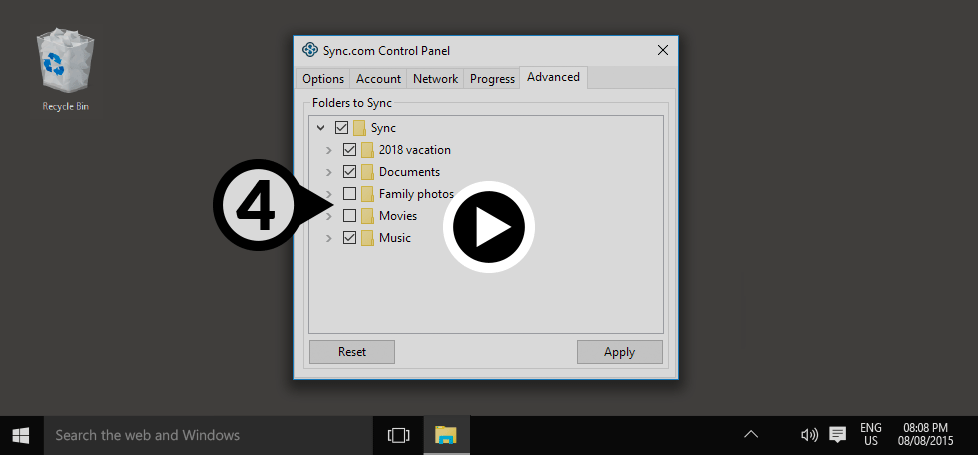
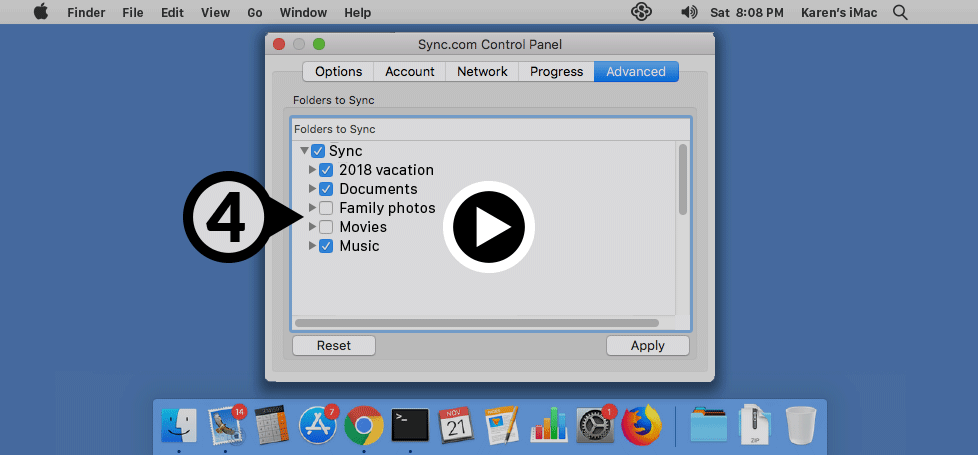
Show on Windows Show on Mac
- Click the Sync icon on the Windows arrangement tray or the Mac menu bar.
- Click the Settings icon (cog).
- Select Preferences.
- Click the Advanced tab.
- Past default all folders are checked, which means that all folders volition sync to the computer you are configuring selective sync on. Uncheck folders you do not want synced.
- Click Utilise.
Note: the Sync app does non automatically delete unchecked folders.
When a folder is deselected via selective sync information technology will prove a grey circle with a minus sign overlay icon, signifying that information technology is no longer syncing and safe to delete from your computer (to free up space). If y'all re-check a binder in the future, Sync volition re-download it from the cloud.
Controlling folder admission with team shared folders:
If you are trying to use selective sync to control which folders other people can access, we recommend you setup squad shared folders instead. Squad shared folders give you granular control over folder access. See the how to use squad shared folders article for more details.
Freeing up space with Vault:
If y'all are trying to use selective sync to store files or folders in the cloud but, we recommend y'all employ Vault instead. Run into the what is Vault article for more details.
How do I confirm that the files in my Sync folder are in the deject?
Sync provides a number of ways to inspect and confirm that the files in your Sync folder accept been successfully uploaded to the cloud.
This article covers files in your Sync folder simply – run across here to verify files uploaded to Vault.
The desktop app status icon and progress tab:
The Sync desktop app automatically verifies all files and folders in your Sync folder for consistency, and the status icon in the Windows system tray or Mac card bar volition display as in sync when verification is confirmed.
Important note:
To prevent syncing bug across different operating systems and platforms, a subset of incompatible characters are non supported by Sync. Files named with these characters may be skipped (not uploaded), and will be listed under the desktop app progress tab (regardless of syncing condition).
Y'all tin can access the Sync desktop app progress tab as follows:
- Click the Sync icon on the Windows system tray or the Mac menu bar.
- Click the Settings icon ().
- Select Preferences from the carte du jour.
- Click the Progress tab.
If yous come across a file listed under the progress tab every bit skipped, the easiest solution would be to rename the file without these characters. View the total list of incompatible characters.
Export total file listing:
With the Sync desktop app installed, you can export a full list of all files stored in your Sync folder and Vault, which makes auditing easier. Here'southward how:
- Click the Sync icon on the Windows organization tray or the Mac menu bar.
- Click the Settings icon ().
- Select Preferences from the menu.
- Select the Account tab.
- Click Generate beside export, to go a listing of all files.
A .CSV file volition download to your computer, which you tin can open up, to search for specific files and verify your files stored in the cloud.
Uninstall the Sync desktop app
A standard uninstall will remove Sync, but retain system configuration information allowing you to hands restore your Sync account on the calculator at a afterwards engagement, if needed.
Follow these instructions:
- Click the Sync icon on the Windows system tray or the Mac carte du jour bar.
- Click the Settings icon ().
- Select Preferences from the menu.
- Select the Account tab.
- Click the Uninstall button and follow the prompts.
Yous tin also use the full uninstaller, to remove all traces of Sync from your computer.
Get the full uninstaller for Windows hither, run the uninstaller and follow the prompts:
https://sync.com/download/sync-uninstaller.exe
Become the full uninstaller for Mac here, open the deejay prototype and and follow the prompts:
https://www.sync.com/download/sync-uninstaller.dmg
Source: https://www.sync.com/help/the-sync-desktop-application/

Postar um comentário for "How Do I Sync Uploaded Documents With Synccom"